Posted 31 October 2025
I’ve been having a heck of a time getting the neopixel LED string working on one of my two Stealthburner toolheads (MissChanger mod). Sometimes it would work, sometimes it would not, and I wasn’t able to correlate the two conditions to anything I was doing. On several occasions it seemed to be correlated with whether or not the front piece (the one containing the LEDs) was securely fastened to the main toolhead body with the two (very) long and two short(er) screws. It seemed it worked when the screws were not in, and didn’t work when they were in and tightened down.
At first I was convinced that one or more LED wires was getting pinched between the two toolhead halves, and when I tightened down the mating screws, the circuit was interrupted. I even found evidence for this and fixed it – several times – but the intermittent behavior continued.
Some research by Grok turned up a LOT of talking about SB LED issues, which were mostly divided into two categories – one thread earlier this year talked about waveform timing issues, and the other thread talked about the fact that the rp2040 outputs 3.3V waveforms while the nominal voltage for the LED string is 5V.
In desperation, I decided to attach a short cable to the LED string connector pads on the Nitehawk PCB on the front half of the SB, thereby allowing me to directly monitor the actual waveform being transmitted to the LED string.
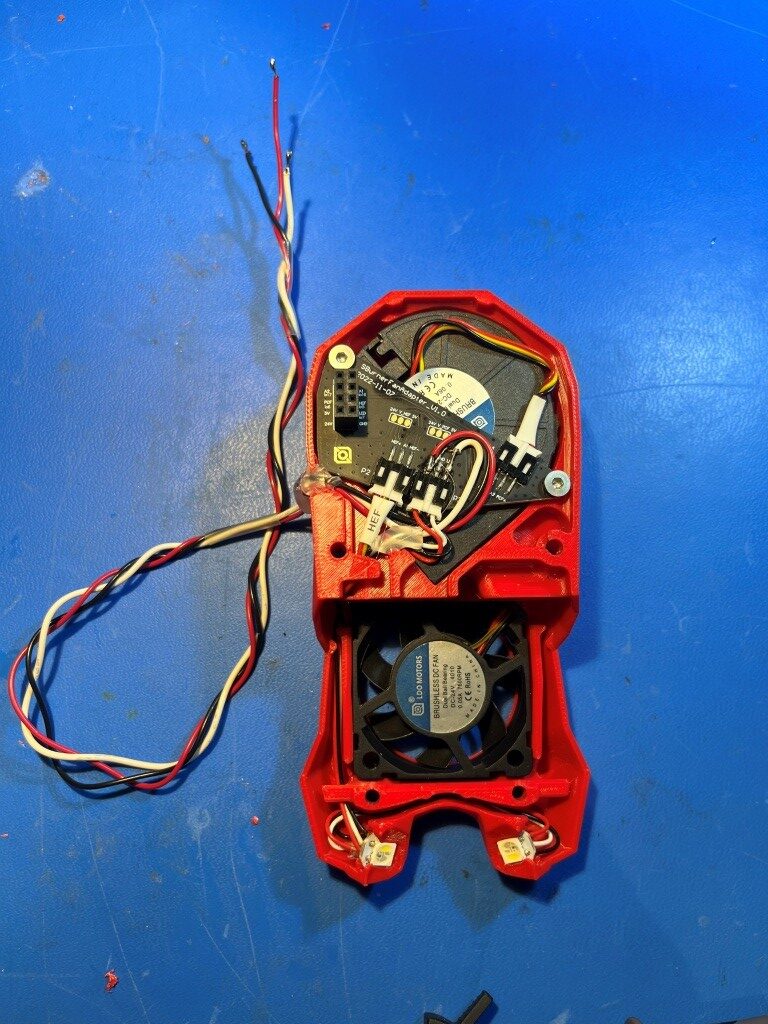
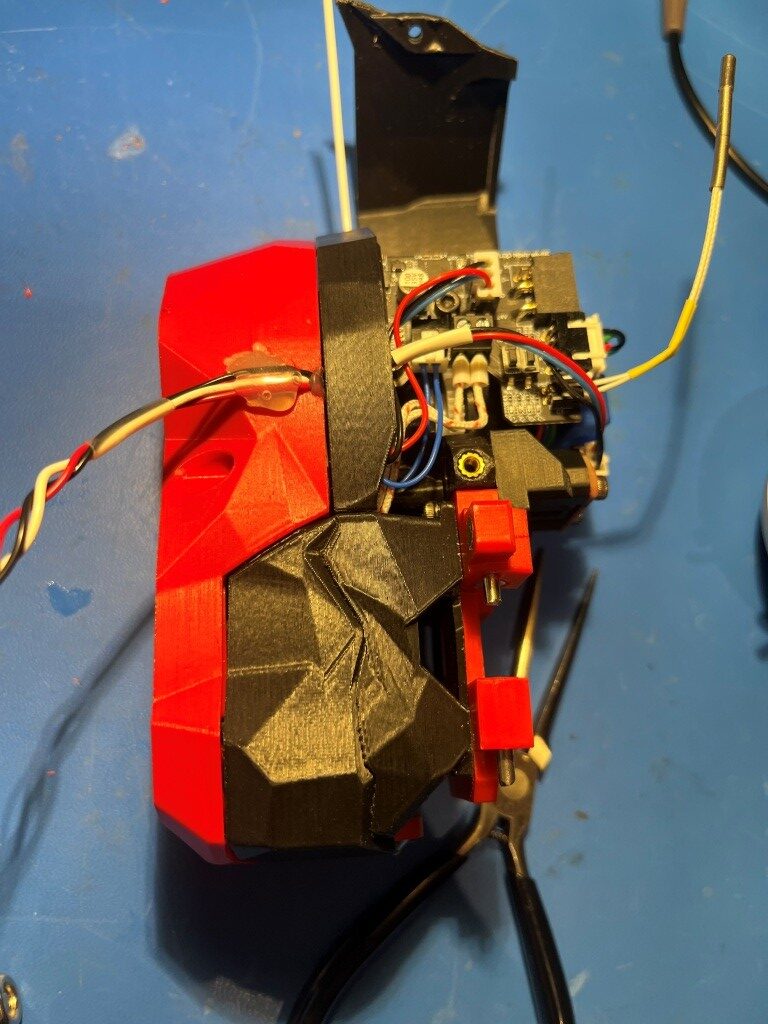
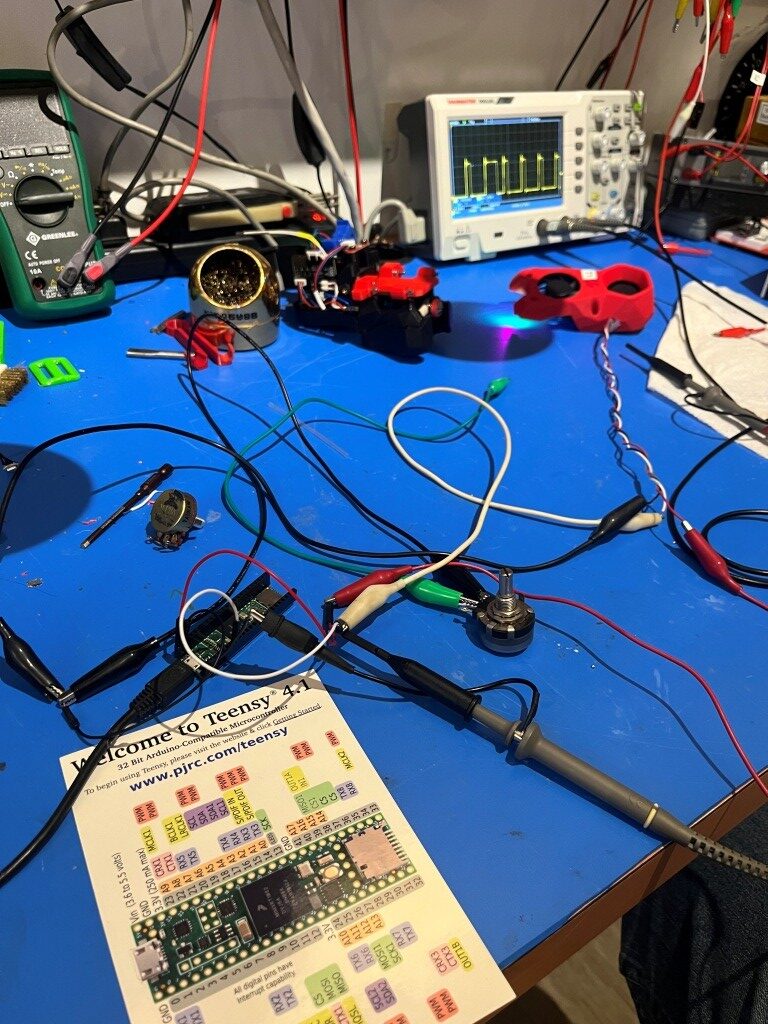
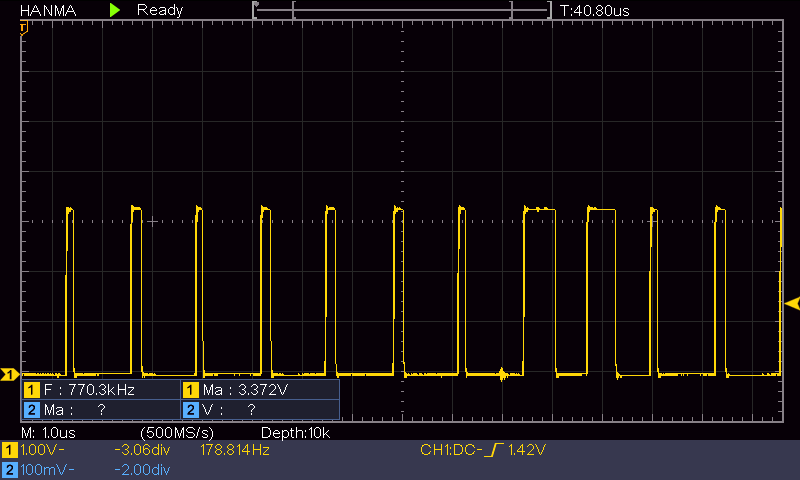
I was able to observe the ‘not working’ waveform once and then my troublesome SB refused to not work again, stubbornly continuing to light up no matter what I did. The waveform in the ‘not working’ condition looked more like triangular waves rather than rectangular indicating an output loading condition of some kind. Unfortunately, I was unable to capture the waveform on my DSO, so I can’t display it here. The ‘working’ waveform is shown below:
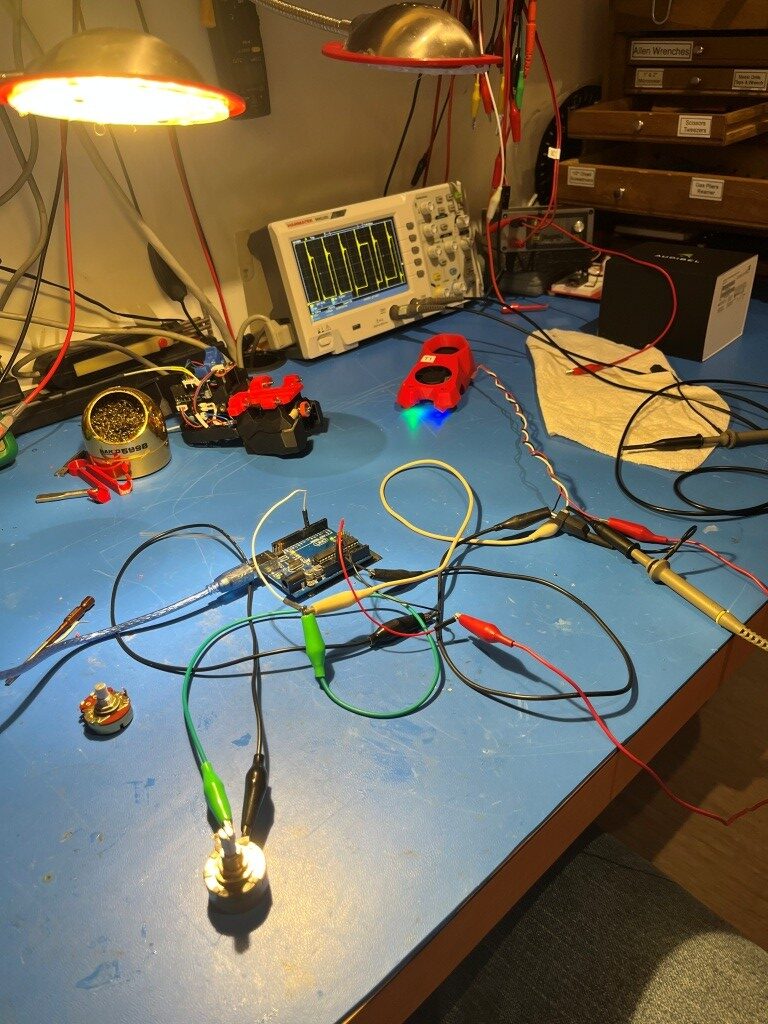
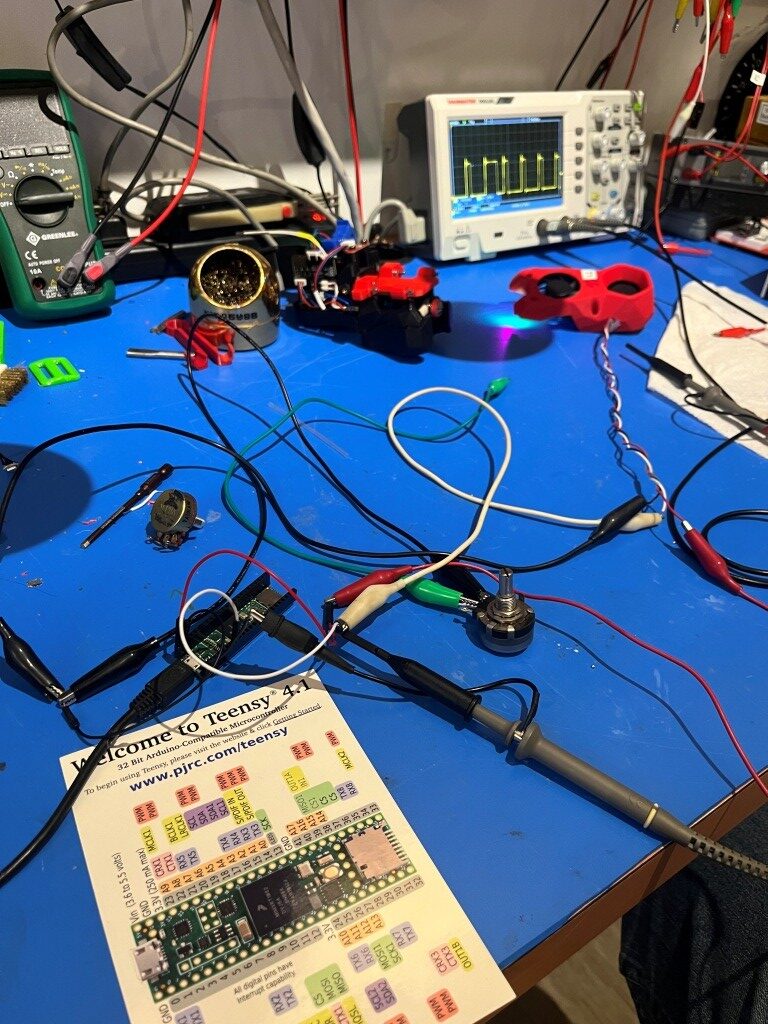
In an earlier post I described the test jig I had created using an Arduino UNO. I could use it to connect directly to the LED string on the front half of the SB, and my troublesome LED string worked fine on the test jig. As Grok pointed out however, the Arduino output waveform went to 5V, not the 3.3V the actual hardware was providing, so the test jig might not be valid. So, I replaced the Arduino UNO with a Teensy 4.1, which does use 3.3V outputs, as shown here:
I added a potentiometer into the output circuit so I could slowly drop the output waveform down from 3.3V to see where the LED string stopped working. At 3.3V output it was solid, and this particular string still worked fine at 2.7V peak, as shown in following trace-grabs:
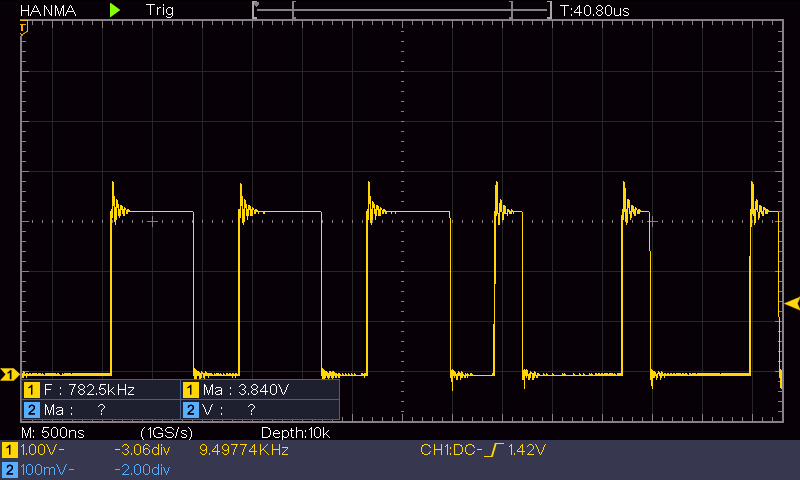
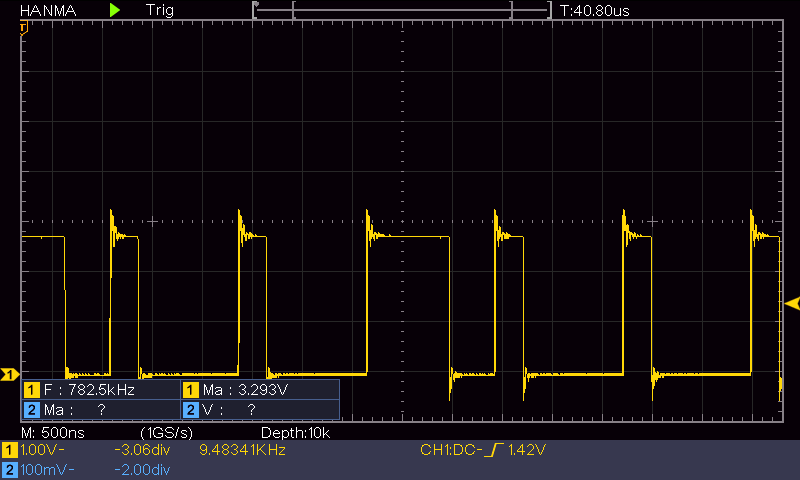
So, it appears that that at least my particular LED string works fine all the way down to 2.7V, so I don’t think the intermittent issues other users have been experiencing are due to the rp2040 having a 3.3V instead of 5V output. My current thinking is that the problems are more likely to be the timing issues discussed in this Klipper Github PR
01 November 2025 Update:
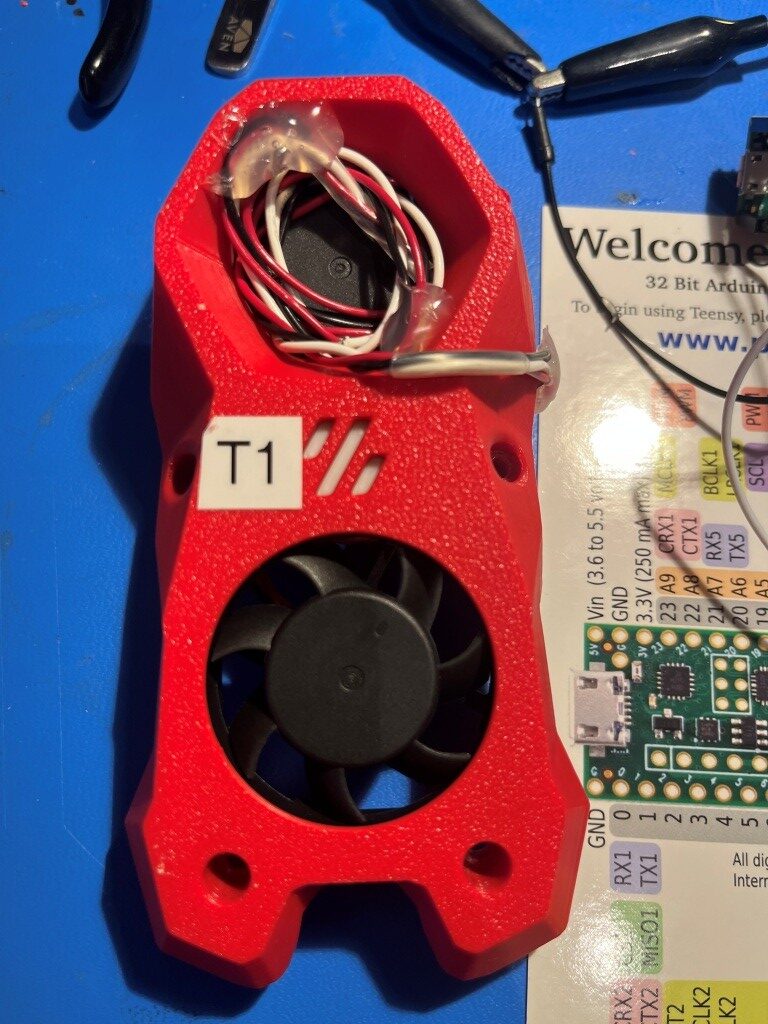
When all was said and done, I could no longer get the LED string on my troublesome toolhead to fail, so I wound up putting it back together and mounting it back on the printer. However, as insurance against a future Murphy attack, I left the external LED data line monitor cable intact, and hot-glued it into the intake cavity for the part cooling fan, as shone in the following photo: